Silica
Background and Overview of Hazards
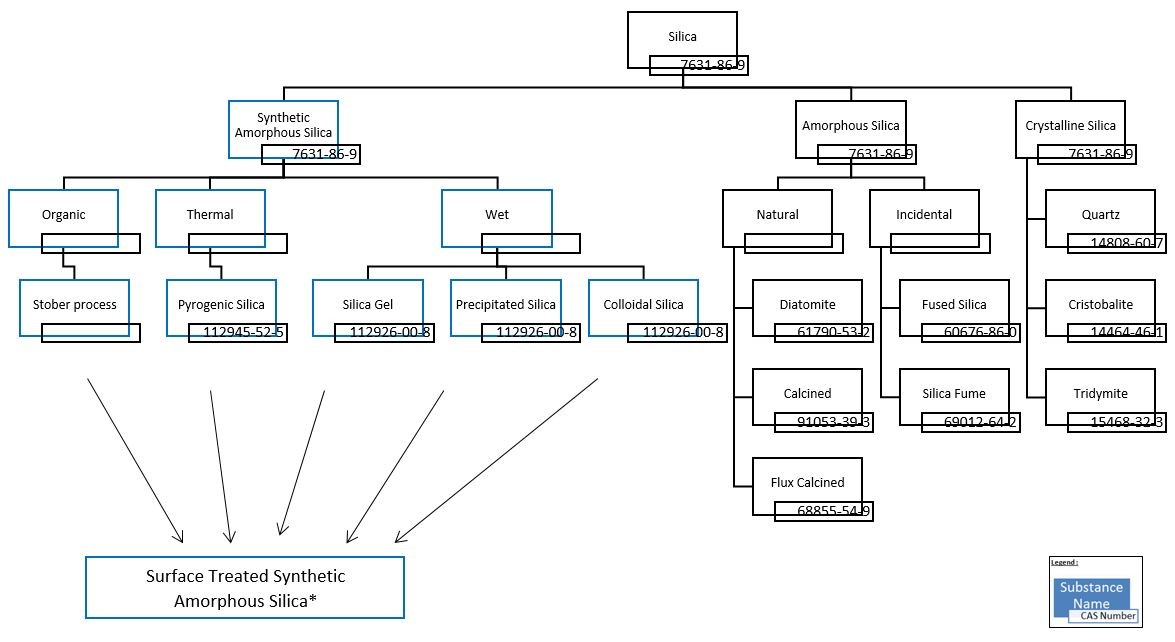
Silica(SiO2) is a common mineral found in the earth’s crust. It is most commonly found in nature as quartz and in various living organisms, but materials like sand, stone, concrete, and mortar also contain silica. Silica exists in two major varieties, crystalline and amorphous, both of which may be natural or synthetic, and each poses different hazards to the user.
Respirable crystalline silica is produced when cutting, sawing, grinding, drilling, and crushing stone, rock, concrete, brick, block and mortar. During these activities, workers are exposed to respirable crystalline silica dust, where the particle size is at least 100 times smaller than ordinary sand. Sand casting carried out at foundries, and hydraulic fracturing (fracking) at oil and gas reserves can also be a source of crystalline silica exposure.
The inhalation of the fine crystalline silica particles increase the risk of developing silicosis (incurable lung disease), lung cancer, chronic obstructive pulmonary disease (COPD), and kidney disease. Extensive epidemiologic evidence revealed that lung cancer and silicosis occur at exposure levels below 100 µg/m3.
OSHA has two respirable crystalline silica standards: one for construction (29 CFR 1926. 1153), and the other for general industry and maritime (29 CFR 1910. 1053). These apply to employees exposed to respirable crystalline silica above 25 µg/m3 as an 8-hour time-weighted average (TWA).
The permissible exposure limit (PEL) limits worker exposures to 50 micrograms of respirable crystalline silica per cubic meter of air (µg/m3), averaged over an 8-hour day. This level is the same for all workplaces covered by the standard (general industry/maritime and construction), and is roughly 50 % of the previous PEL for general industry, and roughly 20 % of the previous PEL for construction and shipyards.
Natural amorphous silica is the naturally occurring silica in the solid amorphous state. This can be found as flint, opal, or diatomaceous earth. Natural amorphous silica has beneficial characteristics including fine particle size, low oil absorption, high brightness, and has replaced the use of crystalline silica from new silica products.
Note: Natural forms of amorphous silica, unlike synthetic versions, often contain crystalline impurities (up to 65%, cristobalite in the case of calcinations). Therefore, it is recommended that the safe handling procedure for crystalline silica is applied to natural amorphous silica.
The PEL limits worker exposures to 0.8 milligrams of amorphous silica per cubic meter of air (mg/m3), averaged over an 8-hour day.
Note: ACGIH and NIOSH have also formulated an exposure limit for silica, but neither the ACGIH nor the NIOSH exposure limits are enforced by OSHA. Therefore, if an employer exceeds the OSHA PEL, the employer may be cited.
Synthetic amorphous silica (SAS) is a form of silicon dioxide that is intentionally manufactured. SAS has been produced and marketed for decades without significant changes in tis physicochemical properties. SAS as white dry powders or dispersions is used in a multitude of industrial applications. It can be used as catalyst carriers, adsorbents, separators and variable-pressure adsorbent. Synthetic amorphous silica can be commonly found in a lab as silica gel. This type of amorphous silica does not fall under the OSHA regulations for crystalline silica.
Synthetic amorphous silica is commonly found in the laboratory used as a stationary phase in chromatography, where the silica gel particles are 40-63 µm in size. Different particle sizes are used depending on the type of chromatography such as flash vs. gravity chromatography.
There are 5 different types of silica gel products:
Type A: Clear pellets, pore diameter = 2.5 nm, also known as fine pore silica gel contains fine pores and shows a large internal surface area. It has a high moisture-absorbing capacity at low humidity and is used as a desiccant for storage of food and metal parts. Type A simply adsorbs water vapor in the atmosphere in a normal humidity range.
Type B: Translucent white pellets, pore diameter = 4.5-7.0 nm, liquid adsorbents, drier and perfume carriers, also may be used as catalyst carriers. Type B adsorbs water vapor at high humidity and releases it at low humidity.
Type C: Translucent, also known as macro-pored silica gel available in spherical and irregular shapes. Used for moisture-proof packing, dehydration and industrial gas purification, removal of organic acids and high polymers from insulated oils, adsorption of high molecular proteins in fermented products, catalyst carrier, etc.
Silica alumina gel: Light yellow, chemically stable, flame-resistant, insoluble except in alkali or hydrofluoric acid. Superficial polarity, thermal stability, performance greater than fine-pored silica gel.
Stabilizing silica gel: Non-crystalline micro-porous solid powder, nontoxic, flame-resisting, used in brewery of grains for beer to improve taste, clearness, color and foam, removal of non-micro-organism impurities.
Safe Handling of Crystalline Silica
Proper engineering controls must be utilized when working with crystalline silica.
Crystalline silica must be used in a functioning chemical fume hood. In areas where a chemical fume hood is not available, other forms of local exhaust ventilation (e.g. canopy hood, elephant trunk) should be used. If local exhaust ventilation is not feasible or insufficient to keep the concentration below the PEL, respirators must be worn by those exposed to the dust.
It is required that those using respirators complete a medical evaluation and are fit tested by the Division of Safety and Compliance (S&C). S&C should be contacted to perform air monitoring in these areas to determine potential exposures.
To avoid dust settling on your clothes and body, wear a laboratory coat (or other protective clothing), safety goggles, and gloves (latex or nitrile)
Keep containers tightly closed when not in use.
There are two types of engineering controls to reduce dust exposures during construction. The first is dust suppression with water and the second is local exhaust ventilation to capture dust at its source. Another control method that may work well is enclosing the operation (“process isolation”).
Employers are required to perform an initial monitoring to assess an 8-hour time-weighted average (TWA) exposure for each employee by taking one or more personal breathing zone air samples that will reflect the exposures of employees on each shift, for each job classification, in each work area. This exposure assessment should be shared with the employees within 15 days of completing the exposure assessment. In the event that the exposures are above the permissible exposure limit (PEL), the employer should describe in a written notifications that corrective action is being taken to reduce the employee exposure to be at or below the PEL. Any areas where the exposures are known to be above PEL should be regulated and should be segregated from the rest of the workplace. Post signs (as shown below) at the entrances to these regulated areas.
Signs:
The employer shall post signs at all entrances to regulated areas that bear the following legend:
DANGER
RESPIRABLE CRYSTALLINE SILICA
MAY CAUSE CANCER
CAUSES DAMAGE TO LUNGS
WEAR RESPIRATORY PROTECTION IN
THIS AREA
AUTHORIZED PERSONNEL ONLY
Engineering and work practice controls must be used whether the exposure limit is above or below the PEL. Respirators are required only where the exposure levels exceed the PEL (regulated areas).
A written exposure control plan should be provided on site. Ensure that this plan is reviewed annually and is readily available for examination. The plan should address the following:
Description of the tasks in the workplace that involve exposure to respirable crystalline silica
Description of the engineering controls, work practices, and respiratory protection used to limit employee exposure
Description of the housekeeping measures used to limit employee exposure
Employees should be provided with medical surveillance at no cost at least once every three years.
Air monitoring data should be recorded and should address the following:
Date of measurement for each sample taken
Task monitored
Sampling and analytical methods used
Number, duration, and results of samples taken
Identity of laboratory that performed the analysis
Type of PPE, worn by employees monitored
Name, SS#, job classification of all employees represented by monitoring, indicating which employees were actually monitored.
Objective data should be recorded and should address the following:
Crystalline silica-containing material in question
Source of the objective data
Testing protocol and results of testing
Description of process, task, or activity on which the objective data were based
Other data relevant to process
DO NOT dry sweep or brush near crystalline silica. It is only acceptable when wet sweeping, HEPA-filtered vacuum and other methods that minimize the likelihood of exposure is not available.
DO NOT use compressed air to clean clothing or surfaces in regulated areas, unless used with proper ventilation.
Dangers and Incompatibilities:
Strong oxidizing agents (fluorine, chlorine trifluoride, hydrofluoric acid, oxygen difluoride (explosive), etc.)
Silica will dissolve in hydrofluoric acid and produce a corrosive gas – silicon tetrafluoride.
Heating a mixture of wet silica with powdered magnesium may cause a violent explosion.
Silica in the form of sand will react with burning sodium (do not use to combat flammable metal fires).
For employees on construction sites, engaged in a task identified in the table below, the employer must fully and properly implement the engineering controls, work practices, and respiratory protection specified for the task in the table. These controls are not required if the employer conducts an exposure assessment, limits the exposure of the employee to respirable crystalline silica, and determines the exposure to be below the PEL (section d of 29 CFR 1926.1153). On the other hand, if the employer fully implements the engineering controls, work practices, and respiratory protection listed in this table, it is not required to conduct exposure assessments, or otherwise comply with a PEL for employees engaged in those tasks.
| Equipment/task | Engineering and work practice control methods | Required respiratory protection and minimum assigned protection factor (APF) | |
|---|---|---|---|
| ≤ 4 hrs/shift | > 4 hrs/shift | ||
| (i) Stationary masonry saws | Use saw equipped with integrated water delivery system that continuously feeds water to the blade Operate and maintain tool in accordance with manufacturer's instructions to minimize dust emissions | None | None |
| (ii) Handheld power saws (any blade diameter) | Use saw equipped with integrated water delivery system that continuously feeds water to the blade Operate and maintain tool in accordance with manufacturer's instructions to minimize dust emissions: | ||
| -When used outdoors | None | APF 10 | |
| -When used indoors or in an enclosed area | APF 10 | APF 10 | |
| (iii) Handheld power saws for cutting fiber-cement board (with blade diameter of 8 inches or less) | For tasks performed outdoors only: Use saw equipped with commercially available dust collection system Operate and maintain tool in accordance with manufacturer's instructions to minimize dust emissions Dust collector must provide the air flow recommended by the tool manufacturer, or greater, and have a filter with 99% or greater efficiency | None | None |
| (iv) Walk-behind saws | Use saw equipped with integrated water delivery system that continuously feeds water to the blade Operate and maintain tool in accordance with manufacturer's instructions to minimize dust emissions: | ||
| -When used outdoors | None | None | |
| -When used indoors or in an enclosed area | APF 10 | APF 10 | |
| (v) Drivable saws | For tasks performed outdoors only: | ||
| Use saw equipped with integrated water delivery system that continuously feeds water to the blade Operate and maintain tool in accordance with manufacturer's instructions to minimize dust emissions | None | None | |
| (vi) Rig-mounted core saws or drills | Use tool equipped with integrated water delivery system that supplies water to cutting surface Operate and maintain tool in accordance with manufacturer's instructions to minimize dust emissions | None | None |
| (vii) Handheld and stand-mounted drills (including impact and rotary hammer drills) | Use drill equipped with commercially available shroud or cowling with dust collection system Operate and maintain tool in accordance with manufacturer's instructions to minimize dust emissions Dust collector must provide the air flow recommended by the tool manufacturer, or greater, and have a filter with 99% or greater efficiency and a filter-cleaning mechanism Use a HEPA-filtered vacuum when cleaning holes | None | None |
| (viii) Dowel drilling rigs for concrete | For tasks performed outdoors only: | ||
| Use shroud around drill bit with a dust collection system. Dust collector must have a filter with 99% or greater efficiency and a filter-cleaning mechanism | APF 10 | APF 10 | |
| (ix) Vehicle-mounted drilling rigs for rock and concrete | Use dust collection system with close capture hood or shroud around drill bit with a low-flow water spray to wet the dust at the discharge point from the dust collector | None | None |
| OR | |||
| Operate from within an enclosed cab and use water for dust suppression on drill bit | None | None | |
| (x) Jackhammers and handheld powered chipping tools | Use tool with water delivery system that supplies a continuous stream or spray of water at the point of impact: | ||
| -When used outdoors | None | APF 10 | |
| -When used indoors or in an enclosed area | APF 10 | APF 10 | |
| OR | |||
| Use tool equipped with commercially available shroud and dust collection system | |||
| Operate and maintain tool in accordance with manufacturer's instructions to minimize dust emissions | |||
| Dust collector must provide the air flow recommended by the tool manufacturer, or greater, and have a filter with 99% or greater efficiency and a filter-cleaning mechanism: | |||
| -When used outdoors | None | APF 10 | |
| -When used indoors or in an enclosed area | APF 10 | APF 10 | |
| (xi) Handheld grinders for mortar removal (i.e., tuckpointing) | Use grinder equipped with commercially available shroud and dust collection system | APF 10 | APF 25 |
| Operate and maintain tool in accordance with manufacturer's instructions to minimize dust emissions | |||
| Dust collector must provide 25 cubic feet per minute (cfm) or greater of airflow per inch of wheel diameter and have a filter with 99% or greater efficiency and a cyclonic pre-separator or filter-cleaning mechanism | |||
| (xii) Handheld grinders for uses other than mortar removal | For tasks performed outdoors only: Use grinder equipped with integrated water delivery system that continuously feeds water to the grinding surface | None | None |
| Operate and maintain tool in accordance with manufacturer's instructions to minimize dust emissions | |||
| OR | |||
| Use grinder equipped with commercially available shroud and dust collection system | |||
| Operate and maintain tool in accordance with manufacturer's instructions to minimize dust emissions | |||
| Dust collector must provide 25 cubic feet per minute (cfm) or greater of airflow per inch of wheel diameter and have a filter with 99% or greater efficiency and a cyclonic pre-separator or filter-cleaning mechanism: | |||
| -When used outdoors | None | None | |
| -When used indoors or in an enclosed area | None | APF 10 | |
| (xiii) Walk-behind milling machines and floor grinders | Use machine equipped with integrated water delivery system that continuously feeds water to the cutting surface | None | None |
| Operate and maintain tool in accordance with manufacturer's instructions to minimize dust emissions | |||
| OR | |||
| Use machine equipped with dust collection system recommended by the manufacturer | None | None | |
| Operate and maintain tool in accordance with manufacturer's instructions to minimize dust emissions | |||
| Dust collector must provide the air flow recommended by the manufacturer, or greater, and have a filter with 99% or greater efficiency and a filter-cleaning mechanism | |||
| When used indoors or in an enclosed area, use a HEPA-filtered vacuum to remove loose dust in between passes | |||
| (xiv) Small drivable milling machines (less than half-lane) | Use a machine equipped with supplemental water sprays designed to suppress dust. Water must be combined with a surfactant | None | None |
| Operate and maintain machine to minimize dust emissions | |||
| (xv) Large drivable milling machines (half-lane and larger) | For cuts of any depth on asphalt only: Use machine equipped with exhaust ventilation on drum enclosure and supplemental water sprays designed to suppress dust | None | None |
| Operate and maintain machine to minimize dust emissions | |||
| For cuts of four inches in depth or less on any substrate: | |||
| Use machine equipped with exhaust ventilation on drum enclosure and supplemental water sprays designed to suppress dust | None | None | |
| Operate and maintain machine to minimize dust emissions | |||
| OR | |||
| Use a machine equipped with supplemental water spray designed to suppress dust. Water must be combined with a surfactant | None | None | |
| Operate and maintain machine to minimize dust emissions | |||
| (xvi) Crushing machines | Use equipment designed to deliver water spray or mist for dust suppression at crusher and other points where dust is generated (e.g., hoppers, conveyers, sieves/sizing or vibrating components, and discharge points) | None | None |
| Operate and maintain machine in accordance with manufacturer's instructions to minimize dust emissions | |||
| Use a ventilated booth that provides fresh, climate-controlled air to the operator, or a remote control station | |||
| (xvii) Heavy equipment and utility vehicles used to abrade or fracture silica-containing materials (e.g., hoe-ramming, rock ripping) or used during demolition activities involving silica-containing materials | Operate equipment from within an enclosed cab | None | None |
| When employees outside of the cab are engaged in the task, apply water and/or dust suppressants as necessary to minimize dust emissions | None | None | |
| (xviii) Heavy equipment and utility vehicles for tasks such as grading and excavating but not including: Demolishing, abrading, or fracturing silica-containing materials | Apply water and/or dust suppressants as necessary to minimize dust emissions | None | None |
| OR | |||
| When the equipment operator is the only employee engaged in the task, operate equipment from within an enclosed cab | None | None | |
Emergency Procedures
Ingestion: Not applicable.
Skin Contact: Not applicable.
Inhalation: No specific first-aid is necessary since the adverse health effects associated with exposure to crystalline silica (quartz) result from chronic exposures. If there is a gross inhalation of crystalline silica, remove the person immediately to fresh air, give artificial respiration as needed, seek medical attention as needed.
Eye Contact: Do not rub eyes. Flush eyes gently in an eye wash station for a minimum of 5 minutes. Wash until particle is removed. If irritation persists seek medical attention.
Fire: Crystalline silica is not flammable, combustible or explosive.
Spills: Be careful with silica dust. Ventilate the area of the spill to remove any airborne dust. Do not rely on sight to tell if silica is airborne. Do not dry-sweep the spilled silica. Moisten the solid slightly with water. Collect and place solid in a labeled plastic waste container. Any remaining residue should be moistened again and then carefully swept up and placed in the waste container.
Storage
Keep container tightly closed in a dry and well-ventilated place.
Waste Disposal
Collect all waste and dispose of through DRS.