Work Practices Using Vacuums
When working in a laboratory, there are many apparatus configurations and procedures that require the use of a vacuum or the generation of a reduced pressure system. Weak points in the system can create implosion or explosion hazards. To ensure safe working conditions, use the universal work practices outlined below.
Use Appropriate Tubing and Equipment
Always use tubing (metal, thick walled rubber, etc.) that is rated for the appropriate pressure or vacuum conditions you will be using. Use tubing that is in good condition and free of cracks, holes, corrosion or other signs of degradation. Don't use glassware that is thin, scratched or star-cracked. Avoid using round bottom flasks over 1000 mL in volume or glassware/equipment that is not approved for vacuum work.
Check Your Connections
Connections (ball joint, ground glass, etc.) between tubing and apparatus require clamping (keck, hose, pinch, etc.) to ensure system integrity. Make sure all connections are properly greased, lubricated or sealed.
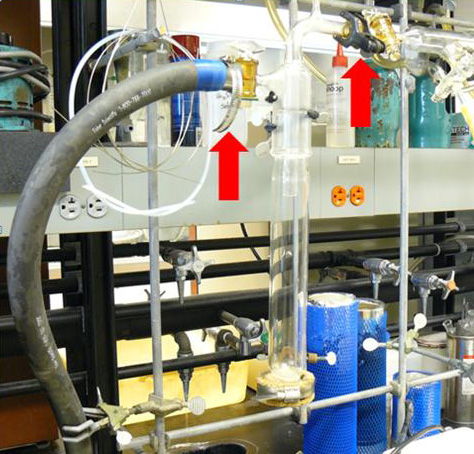 Vacuum trap with connections clamped (arrows).
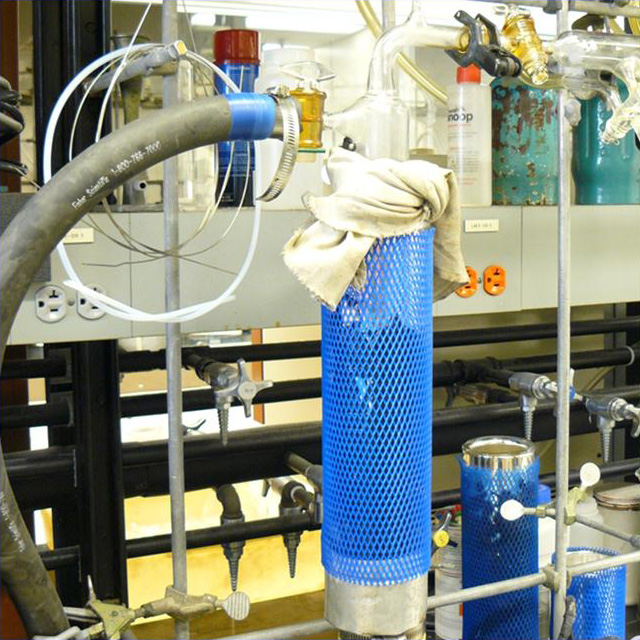
Trap inserted into dewar flask(with polyethylene netting) with lid covered (towel).
Secure Traps
Make sure to properly secure all traps and dewar flasks to avoid unnecessary movement that can cause glass breakage.
Use Appropriate Sized Traps
Always use appropriate sized traps when evaporating substances. Don't use a small volume trap if the displaced material is of large volume.
Use Iced Traps As Appropriate
Always properly use iced traps to at least -60°C when operating a vacuum system. Cooling systems can be electrically refrigerated systems, liquid Nitrogen (see WARNING below) or traditional dry ice with isopropanol (-78°C). Dewar flasks (after trap insertion) must be ¾ full or more with coolant. When in use, dewar flasks should always be covered with foam, glass wool, towel, foil, etc. to minimize the evaporation of coolant.
Bleed Lines
Be sure to slowly bleed vacuum lines (breaching of the reduced pressure system) before disconnecting traps or other apparatus.
Empty Traps
Never allow the bottom of the trap to be filled to half full or more with accumulated substances.
Coat glassware
Whenever possible, use tape, polyethylene netting or plastic coated glassware (flasks, receivers, rotaryevaporator bump traps, etc.) to minimize flying debris if glass implodes. It is not realistic to have all glassware coated but make an effort. It's your safety at stake!
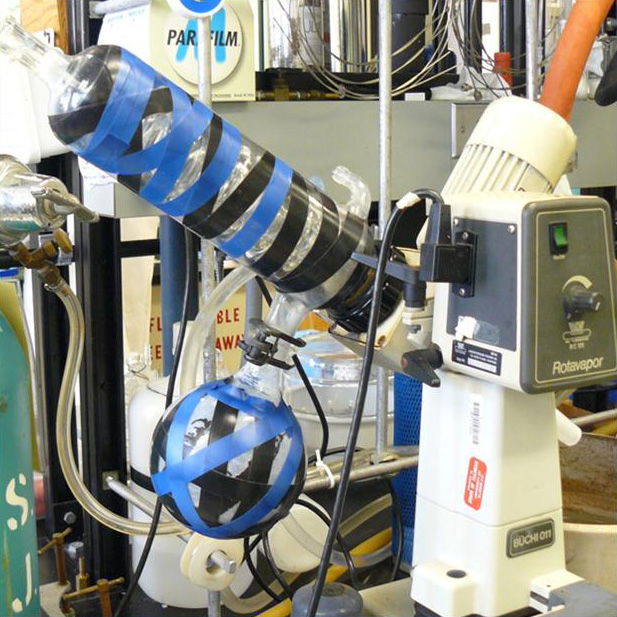
Rotary-evaporator taped to prevent implosion hazard.
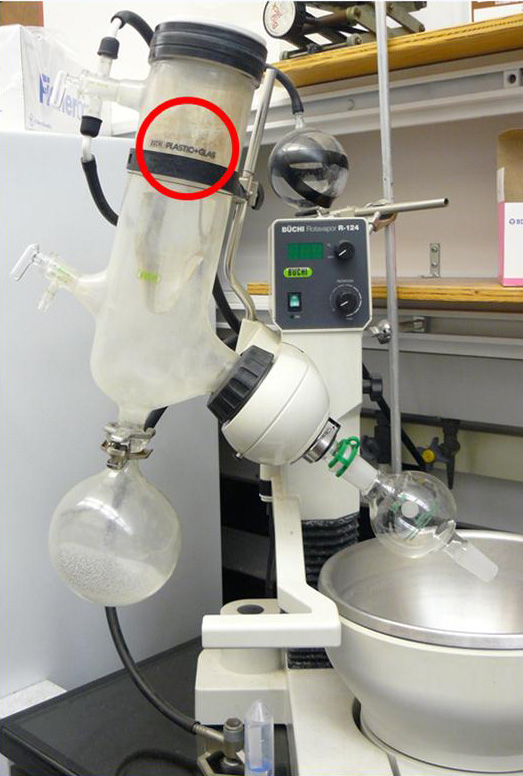
Rotary-evaporator with plastic coated glassware.
WARNING! Liquid Nitrogen used as a coolant demands that the system be under vacuum before and after using liquid nitrogen. Otherwise liquid oxygen can condense in the trap and cause explosion. Once under vacuum, submerge the trap into a dewar flask to contain the liquid nitrogen. When done, allow the trap to be removed from the dewar flask (filled with liquid nitrogen) and come to room temperature before opening the vacuum lines.
Portable Vacuum Pumps (high vacuum and water recirculating aspirators)
Maintenance: Change pump oil monthly to prevent damage to pumps. Treat and dispose of used pump oil as contaminated waste (chemical waste UI# 9422 - Oil, vacuum pump).
Storage: Vacuum pumps should be stored in cabinets with ventilation. Due to heat generated by operating pumps, do not store volatile, corrosive, unstable, or flammable substances in cabinets with vacuum pumps.
Exhaust: Due to the displacement of dangerous substances, vacuum pumps should be exhausted into a cabinet which is connected to building exhaust.
Guards and secondary containment: All vacuum pumps that utilize a belt driven motor must have belt guards. Pumps should, if possible, be placed in a secondary container to contain oil leaks/spills.
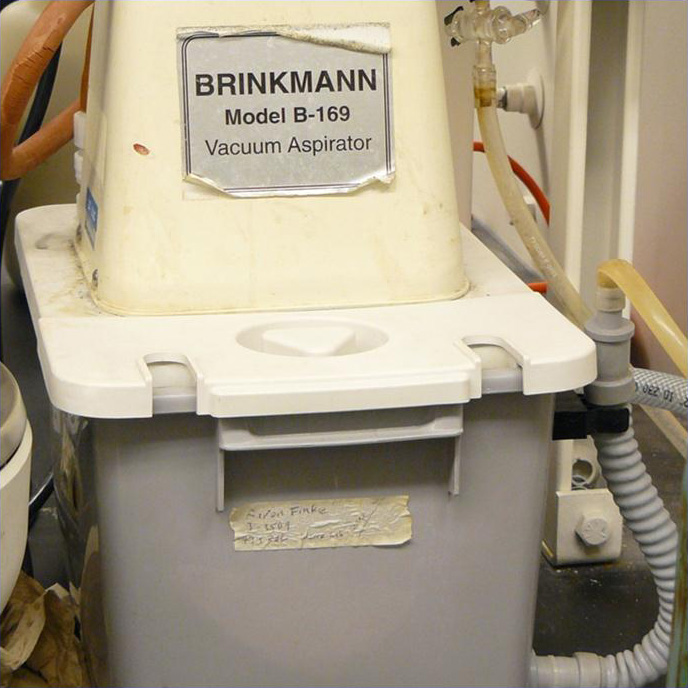
Water Recirculating Aspirator.
Vacuum Gauges (Electronic, Mechanical and Mercury)
Use of mercury manometers/McLeod gauges is discouraged due to the toxic nature of mercury and safety issues involving the storage, use and replenishing of mercury containing devices. Instead consider using modern electronic and mechanical gauges that offer continuous and convenient vacuum level monitoring.
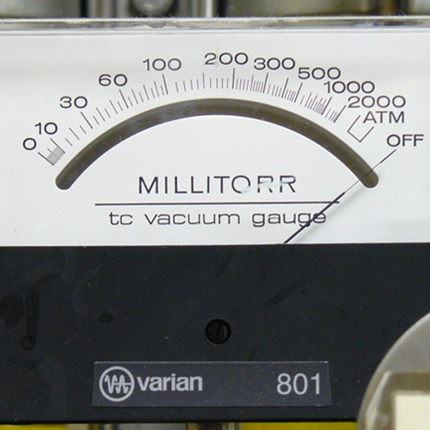
Mechanical vacuum
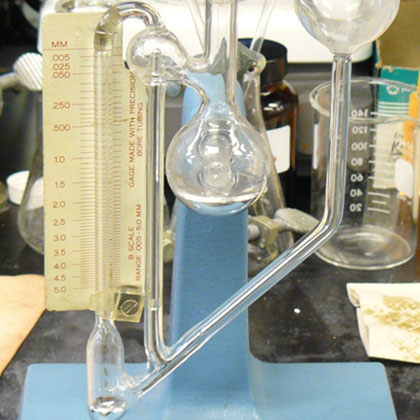
McLeod vacuum gauge