Hunting Season Hazards
Plan Ahead
Hunting seasons may present unintended hazards to field researchers if careful planning and safety precautions aren’t considered and implemented before heading out to conduct fieldwork. Always be aware of active hunting seasons (archery and firearm), determine if you are scheduled to work in an active hunting area, and plan your work accordingly. While working in the field during hunting seasons, every employee is responsible for taking the necessary precautions to make themselves highly visible and their presence known; being seen is being safe!
Hunting Season Dates
Awareness of the various hunting season dates will inform you of hunting activities and the hazards you may encounter. Hunting is most prominent from September through February and may occur in forests, fields, and wetlands.
For estimated date ranges, refer to the Illinois Department of Natural Resources Season Dates – Rules of Thumb4
For exact dates, refer to the Hunting and Trapping Digest Quick Reference Card1
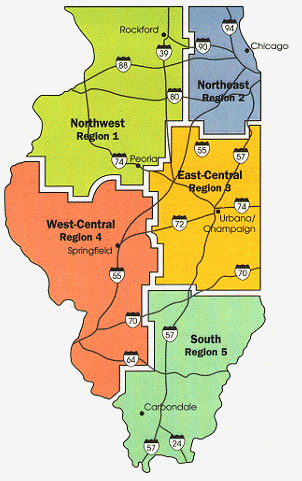
IL map of the 5 hunting regions. Map courtesy of the American Park Network.
Active Hunting Areas
Refer to the IDNR Division of Wildlife Hunt Illinois Application2 to learn the types of hunting offered throughout Illinois and any special regulations and restrictions that may affect specific state-owned/managed property. If you have permission to work on private lands, regularly ask the landowner if they have authorized hunting on their land. Discuss who, where, and when hunting activities may occur on the property.
Avoid High-Use Times
Opening days, weekends, early mornings, and evening hours are typical high-use times that should be avoided. Supervisors should plan fieldwork activities during mid-week, preferably mid-day, to minimize employee risk and the hazard of exposure to the largest number of hunters.
Check-Out and Check-In
Develop and follow program-specific procedures to let predetermined contacts know where you are going, when you will get there, and when you plan to return. This is always a good practice, but even more important during hunting season.
Plan and Prepare for Health & Safety Emergencies
Have a First Aid Kit Available and recommend up-to-date first aid training.
Access to a Phone or Two-Way Radio to communicate your location.
Personal Medication (allergies, diabetes, etc.).
Emergency Calling List to summon help.
On-Site Safety Precautions
Wear high-visibility clothing (vests, hats, etc.). Select colors that stand out, like bright, fluorescent orange or pink. Avoid whites, blacks, browns, or earth-toned greens and animal-colored clothing.

Person wearing fluorescent orange clothing Credit Daniel Stephens, INHS.
Make noise, making yourself known. Alert hunters to your presence by whistling, singing, or carrying on a conversation as you walk. Particularly if you hear shooting close by. Hunters are usually listening for sounds of animal movements.
Communicate with hunters and be aware of their presence
- If you see a hunter in the parking lot or on the trail, it may be beneficial to talk to them. Knowing the general area where a hunter will be, allows you to avoid that area if possible.
- During deer season, especially archery season, hunters may be hunting from elevated stands.
- Depending on the hunting season and target species, hunters may not be required to wear blaze orange/pink clothing. Don't assume you will always see a hunter wearing high-visibility clothing while afield.
Be courteous. Once a hunter is aware of your presence, don't make unnecessary noise that disturbs wildlife and move away from the area.
Work in pairs. The purpose of the buddy system is to provide rapid assistance in the event of an emergency.
Know your comfort level. Adapt your fieldwork schedule accordingly.